
Nuanced.
Where real conversations happen — with host Aaron Pete.
Nuanced.
242. Mark Milke: The Surprising Problem with With Victim Mentality
Use Left/Right to seek, Home/End to jump to start or end. Hold shift to jump forward or backward.
The founder of the Aristotle Foundation and author of The Victim Cult, Mark Milke, discusses victim mentality, reconciliation, free speech, individual responsibility, Israel and Gaza, and whether Canada has become too focused on identity, victimhood, and historical grievance with Aaron Pete.
I've always hated land acknowledgements. And the reaction I get from people privately was like, well, you're allowed to say that. I'm not allowed to say that. Like, I'm not allowed to say that in a room. And it's just like, how how much do you think our society is governed by things that people don't think they're allowed to say? Not because the law said so, but because people are self-censoring because the societal pressure is so strong.
SPEAKER_00The the New York Times columnist Friedman uh mentioned something effective, the only other media he'd seen that's that shy and that kind of conformist was in Canada. And I thought, yeah, I understand.
SPEAKER_01That's what blows my mind is just the idea that you can't say something because I'm a I'm as close to a free speech absolutist as you can be.
SPEAKER_00The great evil in human history has been to not look at people as individuals. But and and and who your favorite, you know, who the favored group is and how it's defined just changes from century to century, from civilization to civilization. But I think it's always dangerous. Your book is called the victim cult. Why did you call it a cult? Um the problem becomes if you get stuck there, we know that people get stuck in kind of victim thinking individually.
SPEAKER_01How do you honor the pain and trauma people go through without ending up in a victim culture? Mark, I greatly appreciate you coming on the show today. Would you mind briefly introducing yourself for people who might not be acquainted with your work?
SPEAKER_00Sure. Uh most importantly, I grew up in born and raised in Kelowna, which very few people are. Uh most of them are visitors there, or they come there from the prairies in Toronto these days. Um, currently in Calgary, but I'm the president and founder of the Aristotle Foundation for Public Policy. And this got underway five years ago in the background, three years ago publicly. We championed reason, democracy, and civilization. Maybe the shorter way to put it is we're we're trying to help Canada become sane and safe again, because I think uh we live in an age of chaos. I think there's all sorts of anti-reality ideas out there. And there's certainly some anti-civilizational trends um which are concerning. And um, people take civilizations for granted when you're peaceful and somewhat prosperous in Canada, though that's been a challenge recently. And uh, we shouldn't, because um sane, safe, peaceful, prosperous civilizations are built. They're not automatic. And so there are things that go into that. So we set up the Aristotle Foundation to kind of address, I would say, modern-day threats to uh to Canada from sort of all comers. And there's a lot out there that I think potentially undermines um the peaceful nation state. That was never perfect. It isn't perfect now, but took a lot of people a lot of time to build.
SPEAKER_01What are some of those examples of the ones that stood out to you that caused you to start the foundation?
SPEAKER_00Well, um, yeah, let's let's go to some concrete examples. I wrote a book book called The Victim Cult that uh we're gonna talk about here in a moment from 2019 and then revised it a couple of years ago for the US market and the Canadian market. But I would say some of my concerns come from that. So broadly, I would say what's what's a cliche but known as cancel culture, where um you can't say that out loud. Um, and I don't mean being insulting or or that sort of thing, but there's been a tendency over the past, I think, 10 or 15 years, perhaps the last 40 years, if you read Annal Bloom and The Closing of the American Mind, to focus on identities as opposed to ideas. And uh that's one concern. Uh, I think you want to unite people around great ideas, excellent ideas, um, and not necessarily around identities. I think that that can be very dangerous, as I wrote about in the victim cult. Um, other modern-day threats. Well, separatism. I live in Alberta right now. I understand why some people may uh choose that option. Um and separatism, of course, has been with us for a long time in Canada in terms of the threat from Quebec. That's a new or recycled or, you know, coming back threat, if I can put it that way. So we've done some work on that. I would say the idea, the ideas in universities are sometimes uh getting toxic. Um, you know, think about think about um university professors or even um well-meaning justices. Uh you can you can be in a university forever, um, or you can go to law school and become a lawyer and then a judge, um, and never necessarily have to face the reality, say, of the private sector, who sometimes courts rule on in terms of regulation. And so that that means um, you know, academia and sometimes the courts, I think increasingly, can um can ignore reality because it doesn't impact them. I mean, a good example is crime, which is another example, I think, of a modern-day issue that we should be concerned about. Um, when people are recycled through the system, I'm not a fan, you're, you know, you went to law school and and you had the first nation there in Chilliwack. So you're aware of the GLADU principle. I'm not um crazy about that because I think it focuses on the wrong thing, again, identities. And I think the victims of that can be um females on or off reserve, women on or off reserve. And so I don't like um, yeah, when people are not treated as individuals, either in terms of their rights or in terms of their responsibilities. And that's um, I think we've also seen a decline in responsibility, a decline in sort of civic, um, civic virtues that go along with that, where um, you know, the more people are you only scream about their rights, which is an important part of where we've come, um, but only think about their rights to the exclusion of responsibilities, then what happens is um sometimes the state steps in and says, well, um they will they will overreact and and and crush rights because no one's acting responsibility. Um so I even think there's a rights responsibility um tango that's going on in in modern Canada that needs to be addressed and talked about and actually thought through in specifics what that means. So the GLADU, the GLADU um, you know, um Supreme Court ruling uh to me is very concerning because again, it looks at people's individuals. To me, it it escapes responsibility. Um and I think that's that's not good either, because I I do think responsibility is a big part of the equation, self-responsibility, self-government, right? Um, in the in the best sense of that word, uh, that we govern ourselves first and foremost, and that we should always try and do that and be encouraged to do that. So there's a number of things out there that I think are perhaps shredding at the um at civil society.
SPEAKER_01The one that uh you first mentioned that stood out to me is this idea of um self-censorship and not being allowed to say certain things, because the one that I've I've often used, um and I get a lot of feedback when I speak, is I've always hated land acknowledgments. Um and I dislike them because the first time I came across them was like 2017, and a professor was reading off of a piece of paper, and just I am on the unseated ancestral, and it was just like, what are we doing? This is crazy. Like this is not this is not helping me, this is not helping you, this is not addressing any problems. Why are we doing this? And so I would say that because I don't care. It's it's my life, and ideally, like in this claim of reconciliation, they're trying to reconcile with me. And if I don't like it, um, that seems relevant. And the reaction I get from people privately was like, well, you're allowed to say that. I'm not allowed to say that. Like, I'm not allowed to say that in a room. And it's just like, how how much do you think our society is governed by things that people don't think they're allowed to say, not because the law said so, but because people are self-censoring because the societal pressure is so strong?
SPEAKER_00A lot, I think. I remember a story. I lived in Japan for two years. I went there in 1993 after my bachelor's degree, and I remember being in Tokyo, and there was a fellow from the New York Times, I think it might have been Thomas Freedom, if memory serves correctly, and he made um he made a comment actually about the Japanese media, how one time the princess um, you know, was uh there was some mild criticism of the royal family uh in Japan by the media, which is very tame. The Japanese media is very, very tame uh on all issues, I think. And he he mentioned that one time there was a mild criticism of the royal family. And then the next day the royal family trotted out the princess, I forget her name, uh, to look kind of um sad. And that was the message to the media to back off. And it wasn't like tabloid type, you know, uh Charles and Camilla type stuff that you'd see in the UK. It was it was really quite mild stuff. Um, but I remember the the the New York Times columnist uh Friedman uh mentioned something to the effect of the only other media he'd seen that's that shy and that kind of conformist was in Canada. And I thought, yeah, I understand. And I think that is a problem in Canada. So, and for sure, I think there's, you know, we're we're known as nice Canadians. Uh, when I live in Japan, we were only nice compared to the Americans, not to beat up the Americans, but you know, there was plenty of opinionated Canadians over in Japan uh sharing their wisdom, whether whether the Japanese wanted it or not, that sort of thing. So, um, but I think we think of ourselves as nice. And I think there's not been a culture of debate for a long time in Canada. Um, unlike the UK, unlike Australia, unlike the Americans, and of course they have the First Amendment, which protects all sorts of speech, even stuff you don't like, but nonetheless they protect it because the principle they argue, and I think rightly so is more important than you being offended or me being offended. I I didn't know, Aaron, that you didn't care for land acknowledgments. That's fascinating. It's fascinating that you, as a First Nations chief, though, would be told you couldn't have that opinion because sometimes, wrong or right, identities these days protect someone and allow someone to have an opinion that um people that look like me may not, you know, we're not supposed to have, right? Or express.
SPEAKER_01That's what blows my mind is just the idea that you can't say something because I'm a f I'm as close to a free speech absolutist as you can be. Um, I just debated uh Tim Thielman on whether or not we should even have reconciliation at all, whether it's a public good at all, because we've seen billions invested, and frontline communities have not seen billions in in benefits. That's gone a lot to uh what he describes as the reconciliation industry and lawyers and judges and stuff. And so I think that that's like a perfectly valid debate to have. Um I'll I'll take you to one of your points, 718.2e. So I don't know if you know this, but I was a native court worker for about five years. So I worked very closely with uh 718.2e of the criminal code. I'll say quickly, there's two there's the GLADU case, and then there's 718.2E. Um so I think to your point, we probably could have gotten there with the case law without needing it legislated, but it does just say, with particular attention to the circumstances of Aboriginal offenders trying to highlight some of the history around residential schools, colonization, the 60s scoop, and others. Um, you said that that's a concern to you. And I'm just I I think my take personally is we should have clauses for the the bottom 10% of society. We should have extra resources, extra support for anybody who's in that bottom rung. Right now it's First Nations people. My dream, my goal, my hope within my generation is that we're no longer uh the bottom 10% um in employment um circumstances and education outcomes and addiction rates in all of these different pieces, but right now it is indigenous people. Why do you have such a concern around 718.2e of the criminal code?
SPEAKER_00Well, and and you've got a better grasp on the law and the details of that than I do. My concern is, and to your last point, is I think people should be treated as individuals because, and I don't mean this in a glib way, everyone's history is tragic if you go back far enough. And so the danger is, and I wrote the victim call for this reason, if you concentrate on an individual or particular group's um, you know, um trials and tribulations, uh, what you don't know is some other group out there or some other individual out there which has an equally sad story that prevents them from succeeding. So I would back off from all of that. And as per your last point, whether it's the bottom 10% or 5% or whatever, whatever percentage you want to choose, look at people's individuals and try and help them, not because they're indigenous, not because they're my skin color, not because they're East Asian, whatever the category one wants to put them in. And we can get into the even, I think, even the folly of identity categories in a moment. But um, you want to look at people's individuals and actually think about how you help people in poverty um full stop, right? What's what's the best policy or not uh to do that? Because then you're not choosing people and preferring people based on their own family's tragic history or their ethnic tragic history. One of the reasons I wrote the victim cult, and and uh if you've read it, you will know Ellis Ross, um, formerly the highs of First Nation ON MP, wrote the foreword. Uh, because I was talking to, I mean, I had noticed over time, I've done a lot of work on Native issues over the decades in terms of some studies, some columns, uh, some chapters and books. And I'm very much uh almost an individual rights uh absolutist, like you're a free speech absolutist, in a sense, I think the the the great evil in human history has been to not look at people as individuals. But in and and who your favored uh, you know, who the favored group is um and how it's defined just changes from century to century, from civilization to civilization. But I think it's always dangerous. And we got to a place um in the Anglosphere, in the English-speaking nations, not a perfect arrival, but to a place uh through the development of a whole bunch of ideas over the centuries. I would credit monotheism and later aspects of Christianity and others and the Enlightenment that got us to a place where we said, look, the Martin Luther King vision um of look at people's individuals, that doesn't mean you neglect what happened in the past, especially if if the past is closer. What I mean by that to give you a concrete example, um, plenty of people will blame things that happened 100 years ago or even 1,000 years ago on problems today. I'm pretty convinced that that's not the way to look at it. But the closer you are to a wrong, then I think there's some validity. So to be clear, uh the Quakers, for example, when they released their slaves in the late 18th century, um, give them gave them compensation because they realized what a great evil had been done. Um if you were in a school where you're abused, um, I think you're owed some compensation. If you were a Japanese Canadian, this property was stolen uh in World War II. I think we should have compensated more after the Second World War than we did because their property was stolen, their time was stolen. So I think there's a case to be made when there's a very strong, direct, recent link. I'm very skeptical of the notion that uh thinks things should be blamed over much on the past. To give you an example of my own life, my grandparents, you know, came from on my my dad's side, came from Germany and Poland respectively, or Ukraine respectively, met and married in Ebonton, survived the Great Depression. Um, they could have been probably developers and very rich in Kelowna where they lived. My grandfather owned a lot of land, but he would build a house one at a time, sell it. He was not kind of a developer as we know them today. Um, now, uh, you know, I could complain and say I'd I'd be rich if my grandfather was more of that kind of business person. But really, you know, my outcomes are still good. And um and more importantly, my choices or my parents' choices mattered a lot more to my success or failures. And I think the longer you know you go back, the weaker that link is. And that's really dangerous. And that's why I wrote the victim cult in part, in part to be honest as well. I'd seem a certain victim culture on some reserves in Canada versus others, where there was more of a, you know, okay, um, wrongs have happened, and now what are we going to do about the future? And again, not to ignore the past, but I think there's a certain art to the to that. Um it's a sensitive issue in Canada. I'm almost hesitant to talk to talk to you about it, uh being from a First Nation. But the reality is, I think um, and it went into some great detail in the victim cult from a number of cultures where even when you're victimized or your ancestors have been, um, if if a culture gets stuck there, it's very dangerous for a whole bunch of reasons.
SPEAKER_01Well, first I'll say please don't be afraid to say anything to me. Again, I just debated somebody who doesn't believe any reconciliation across the board should be happening at all. Uh, so not afraid of the exchange of ideas. Uh the I guess the first piece I would um, and then we'll get more into your book, I'd just be curious about is you didn't you listed off a bunch of examples of the Japanese. You didn't mention Indian residential schools. Last one closed in 1996. How do you grapple with that one?
SPEAKER_00Well, I think like most issues in history, uh, I don't think it's simple black or white. Um, so I've written a little bit about residential schools, um, and I've read the reports. Um, I also know, you know, I think they were soliciting certain feedback for the um, you know, for the um for the committee 10, 11, 12 years ago now. So I tend to think it leans towards one side. I wrote a column two years ago in the National Post, though, pointing out those who, you know, were from Native communities, indigenous peoples, native peoples in Canada, who said, My mother went to one and it was fine. My grandmother went to one, or I went to one and it benefited me. So I think those stories should be told as well. Because rarely, outside of the Maoes, the Stallens, and the Hitlers in human history, um, rarely is um sort of, you know, um, is there uh, you know, a clear, you know, black and white divide on some of these things. And also with residential schools, you know, let's go back to, well, I'm also aware, for example, that around Calgary, I think it was a Stony First Nation, as late as 19, the early 1960s, was suing to keep a residential school open. Um and so I'm aware in Ontario that some of them are set up as part of the treaty process there, where you know the governments were asked to provide residential schools as part of the, you know, as part of the treaty agreement. So when you have that, I don't think it's necessarily as black and white. Plus, let me back up. I think um I'm always looking for what's the core problem uh now or in human history? What's what's driving something? Because if you get the problem wrong, then you can't get the remedy right. So let me give you a clear example. The problem with residential schools or any boarding schools today would be that, especially if you got a school in the middle of nowhere, um, what's the dynamic? Well, um, it's in the middle of nowhere. You potentially got a principal who could be a pedophile, not always, uh, but that's a potential. Um, and they've uh and there's a great um there's a great power imbalance. And I'm a political scientist. So actually, I think one of the great problems in human history is the concentration of power. Lord Acton, power corrupts, absolute power corrupts absolutely. So a school in the middle of nowhere, um, with a leadership that's bad, which is not always the case. Um, but when it was, you're almost guaranteed abuse. Um and I remember I thought about this, um, Aaron, about 10 years ago, and someone wrote um a column in the New York Times to bring up the New York Times again. And I'm trying to remember the name of the columnist, but he he said, Look, if you want to look for where the next abuse is gonna look is gonna be, look for what we've sacralized. And what he meant by that, he was talking about immigrant communities in Great Britain that were ignored when abuse was going on among the Pakistani communities vis-a-vis lower-class uh British women. And this was ignored until very recently. And now even the labor government has got a commission starting on this, I believe. Um, but the the New York Times columnist, his point was if you sacrilize, if you make something sacred, watch out, because then you can't discuss it, you can't expose it. And I think the problem with residential schools um is first, they're interpreted now as as purely black and white. And I I don't think that's accurate. But I do think the core problem was um if you have no checks and balances. And I also think uh so that's that's a core problem. And if you have, look, there's some reserves in the country today, as you well know, that are very remote, and abuse happens on reserves. And I wrote about this a little bit uh in the victim cult, where I think that should be exposed. And um I don't want to keep talking uh, you know, with without a question from you, Aaron, but I I think the the core problem is you when you get concentrated power, you don't have checks and balances. You can be guaranteed of abuse, whether it's in in a native community, whether it's in a non-native community, um, whether it's you know, Harvey Weinstein, Howard, yeah, Harvey Weinstein, you know, what is it, 10 years ago now in the Me Too movement. Um in fact, at the time when I wrote about this in the victim cult, I was writing the chapter, I actually asked editors across the country to replicate an article in the Atlantic Monthly about uh abuse in in First Nations reserves in Alaska. And it was a very good article. It was entitled The Rape Culture in Alaskan Reserves. And I'd known from talking to people in Canada, from a few news reports that it happened, that this happens in Canada, but no one wanted to talk about it. But to me, the core problem is still there. You've got some reserves in the middle of nowhere that um I think it's it's really trying to bring um the mountain to Muhammad to reform places in the middle of nowhere, as opposed to getting people to the cities where they have opportunity. They may have to be off reserve because the leadership is awful. So, so on and so forth. So I I think a lot about the concentration of power and how dangerous it is. And the remedy in in the West has been generally, okay, let's make people accountable, let's have a voting system, let's have property rights, which I think is part of it. Uh, you know, it gets the money flows in the right direction. So my my issue with residential schools is that I think it's become toxic to talk about um that there were any things, or or there was no alternative at the time. If you have um, if you're in the middle of nowhere in 1920 or 1870, whatever it is, how are you, it's not like you can helicopter teachers into a remote reserve in northern Manitoba. So I guess what's what's the alternative I would say to people? And I wrote about this in the victim cult as well, um, or elsewhere, as I recall. I can imagine if governments and churches did not respond with something at the time, then the accusation would be today, you see, um you didn't care about us back then because you didn't provide school. So I've been around long enough to know that if somebody really wants to kind of bash, they will find reasons to do it, and there's nothing you can do. So I think reality demands. You ask what were the choices at the time if you wanted universal education? And so I'm not saying every residential school was uh what a was a paragon of virtue because they weren't. I just I wonder about the ability to make choices in that taunt and what else was available. Um, to have all on-reserve schools at the time, uh, you know, before when we only had trains, before mass communication, so on and so on and so forth. Uh, in a very poor country, we forget how poor Canada was until recent decades. So I I'm long answered a short question, Aaron. I have huge concerns that residential schools has become kind of a one-sided you can't talk about it, and you can't talk about any positive experiences, even from First Nations people themselves that say, I had a positive experience, or my grandfather did, or I got an education, or people came from abusive situations in communities and they were in in First Nations or in residential schools that uh in some cases maybe survived that.
SPEAKER_01You're correct that we live in a bizarre time where uh Mr. Sean Carleton, who's also uh an educator, has made the term denialism uh so broad as to include my interviews. So just so you're aware, I've spoken with Francis Widowson, Candace Melcom, Nigel Bagar. Uh, you may recognize some of these names as people who are willing to uh try and put forward a different version. Nigel Bagar uh being one of those voices who lays out um the intention to educate a civilization and provide the goods of uh the West to others. But I think Francis Widdowson has uh a good counterpoint to that. And um mainly that in, I think she said the Soviet Union, they sent in missionaries and educators into First Nation communities to live amongst them rather than developing schools that were separate from them. And that would have addressed a lot of the um overcrowding that took place in these schools, um, and it would have resulted in a further assimilation rather than a top-down power approach that you're describing.
SPEAKER_00Right. And and and that is very possible in terms of a remedy. I think it's tough to make sorry, um, frog it by throat. I think it's tough to make that um that call in every situation in every village, town, and city in the history of Canada and pre-Confederation, too. Um, you know, I I the economists like to say that, you know, um, you know, you don't have perfect uh options often, right? You don't have perfect choices. You have trade-offs. And so if you do X, you can't do Y. And so for sure, Francis may be right about that, and she's more of an expert on uh some of the native communities, especially in remote areas uh than I am. But I I would always caution people to say that, you know, it was an easy choice at the time uh in terms of whatever was created in terms of by government churches or anything else. And again, I would I would point to the core problem in human history, which is watch out for what you make sacred and watch out for the concentration of power, because I can guarantee human nature being what it is, that's where your next scandal comes from. That's where your next abuse comes from.
SPEAKER_01So uh just to wrap up this 7118.2 E conversation, then we'll dive into the victim cult. Uh, I'm just curious. Uh, so if I were to provide my journey, I'd just be interested to how you digest it. My grandmother attended St. Mary's Indian Residential School. She was abused there most of the time she attended, as was uh her family members and her relatives. We only had one Hel Clamaelam uh person uh survive today. Uh, they're the last fluent speaker left. And she used alcohol to cope the rest of her life with the abuse that she experienced. As a result, my mother has fetal alcohol syndrome disorder because of that alcohol use. And so I'm placed in this unique position amongst my community as have not having any brain impact, not having a parent who's addicted to alcohol. Um, I would say I'm somewhat an anomaly. So when I look at the broader situation, I sympathize with 718.2e in that there are I am, I'm not unique, um, my mother's not unique in kind of the downstream effects. So, how would you just not codify that at all in any sort of process within the court system? Um, is that somewhat irrelevant and we should just assume that those people should pull up their bootstraps? How do you address kind of those downstream effects?
SPEAKER_00Bootstraps, because yeah, you know, when you've got fetal alcohol syndrome and the rest of it. But I think when you show up in court and you cross the line in terms of your actions against someone else, um, well, there's a number of things that are going on. Number one, um, you've crossed the line. And the question is, does do the courts have a responsibility to now hold you accountable for your actions when you cross the line? I think the answer to that is yes. Um, because look, we we know that most um, you know, uh most, you know, the what the um missing and murdered women, we know that most um most people know they're they're um they're they're perpetrators, right? Whether it's in the native community or non-native community. And so when you give a softer sentence to a male abuser, for example, and you send them back to the community, uh look, I've known too many women that are abused, um, not native, um, that's not my community, but I've known too many people in my history, including close family members that have been abused. And I would not want anyone to get a softer sentence that they deserve or be sent back to the community because someone feels sorry for the what happened to the abuser earlier on. I think at some point a line is crossed and you have to hold that person responsible for their what they've done. And so um, you end up hurting, for example, Native women if a native man has been the abuser and he's sent back to the community or given a light, a light touch sentence. So I actually think it's counterproductive. So that's that's my first concern. The very person who's the victim is is not looked out for in that circumstance. And then secondly, I do think without it's not a glib point that um there are other people who've come from equally tragic histories. There are Holocaust survivors, people whose parents were Holocaust survivors, there are people who may have been beaten within an inch of their life because their father had a bad temper. And so um, what I don't want courts to do is to say your history, tragic as it is, now gives you a bit of a discount. Um I just I find that I think I find that unfair on a kind of an individual rights level, individual responsibility level. And I actually find it dangerous to the victims who may be victimized again or someone else's. So those are my two fundamental objections to GLADU and the section that you mentioned.
SPEAKER_01Sorry, can I just clarify though? Because 718.2E and the GLADU decision don't say only First Nations, they say with particular attention to. So it doesn't remove rights from anybody else. It just adds in the context of like, uh, and I think what it was trying to address, and again, I I welcome you to challenge me, is that the those other circumstances were being considered, but not enough consideration was going towards, okay, this person was abused in Indian residential school, say sexually, then they went on to abuse other people as a consequence. That that context seems relevant. And so they didn't say only First Nations people, they said with special consideration too, to keep in mind that those uh those outlying circumstances were something the court needs to consider because it previously wasn't. That's my understanding of the decision.
SPEAKER_00But in reality, what's happened is it's become not to um not to speak lightly of it, I think it's become a discount. And it's become a discount depending on your identity. And um so either you take into everyone's account, or or sorry, history, um, or I I think you have to take into account none uh because of the victim uh and because of the possibility that someone may re-offend. I tend to think once a line has been crossed, um again, I I know too many women that have been abused, um, to to be sympathetic to a male offender in particular who may receive a discount because of their identity. However well-meaning it is to take into account someone's past, I think once you once you cross the line and you show up into court, I think I think it's time to uh to face the music, unfortunately. Not unfortunately, that person has to face the music and take responsibility for their actions. Uh otherwise they just think this continues and we send out the wrong message.
SPEAKER_01Fascinating. Uh your book is called the victim cult. Why did you call it a cult?
SPEAKER_00Well, um, because the mindset actually, again, keeping in mind that there are real victims in history. We've talked about some now. Um, and there are other people who think they're victims, but it almost in one sense doesn't matter. Um, as I wrote at the in the foreword to the book, um, the problem becomes if you get stuck there. We know that people get stuck in kind of victim thinking individually, they may not, you know, get out of that trap, they may not pursue education, they may not, you know, they can become very sour. Understandably, by the way, like I'm not saying it's easy. I'm, you know, I would not denigrate those who have actually been victimized for a second. Um, but what I discovered when thinking about this, you know, when you look at civilizations around the world and the danger um of getting stuck in victim thinking, even when one is victimized or one's civilization or one's culture, one's ethnicity, one's whatever has been victimized, is um that you make the wrong correlations later on in terms of what it takes to get out of that, but also uh it can become toxic. So let me give you some clear examples. Most people know um Germans became enamored with race theory, you know, in the 20th century and and, you know, um the pseudoscience of racism under the Nazis. But actually, the Germans had a problem with pretty, you know, um, pretty mistaken thinking long before them. The Germans got into it into something called pure culture, right? They they were actually victimized by the French in the late 18th century. The French had occupied parts of Germany. Um, the Germans were, you know, uh abused in many ways under the French. The Germans finally kicked them out in the early 19th century, and the Germans are trying to recreate an identity as people who were victimized always do. What they did is their reach for cultural purity. So you had to be white and Protestant and a Christian. You couldn't even be Jewish and convert to Christianity or Protestantism. You couldn't be a British liberal and have open markets because that was, you know, opposed by kind of the German collectivist mindset. And the Germans really got into this notion of we're permanent victims, and they looked at everyone else as outsiders and with suspicion, and they learned nothing from outside cultures, and that was very dangerous. And and their emphasis on pure culture, which I hear again today a lot, sometimes from the indigenous community, sometimes from others, like pure culture will save us. No, it won't. Actually, what will save you is learning from another culture, cultures that beg, borrow, and steal from each other. But the Germans were almost um allergic to that. And then once you added um the kind of racism theories of the late 19th century to the belief in pure culture, they created a very um nasty, toxic combination um that led to, you know, governments in the 20th century, and the Nazis in particular, saying race matters and purity matters. And I'm those arguments are dangerous. And literally the victimization that the Germans had experienced, they carried that all the way through for another another 150 years, and it ended the way it should have ended with the complete collapse of Germany. But the land of Bach and Beethoven turned into this um nasty, toxic stew of anti-scientific, pseudoscientific beliefs, but ultimately anchored in the notion of victimhood. And there's been other examples through history as well. The the Tutsis, or the Hutus in Rwanda, the Rwandan genocide, for 30 years after independence, the Hutus said, we were victims of the colonialists. Maybe, maybe not. Uh they were victims of the Tutsis, they said. Maybe, maybe not. The Tutsis were the most successful tribe in Rwanda for a whole bunch of reasons. Uh, but the the Hutus focused on that and began to have quotas, began to tell the Tutsis to stay out of politics. There were pogroms against Tutsis in Rwanda, and eventually had the genocide. The Hutus stewed in the victim cult for three decades, and the consequences were deadly. Now, not everybody who stews in that ends up in that situation, or not every culture or nation does. But I saw enough examples in history to go, that's dangerous. Uh, the counterexample, by the way, is um is East Asian Americans and Canadians, who um didn't have quite the experience of Native Canadians or Native Americans, but um certainly had heavy discrimination from the mid-19th century forward. Um, but they rightly pushed back in politics, in law, in demand in a number of ways, uh, but they educated their children. They they valued education, they valued entrepreneurship, they pushed through, even though there was heavy discrimination. And I say that, and that's in the victim cult, as an example of I'm not dismissing what they went through, far from it. In fact, they they have, if you look at the experience of East Asian Canadians and Americans, you will see for victimized groups or people kind of um a battle plan of how to move forward. Um but I I give them as an example of they didn't get stuck there. And getting stuck there in the victimhood mindset is what's dangerous, not only for individuals, but ultimately it can be for entire cultures. Um in a worst case scenario, it goes, it goes even worse than just uh it goes from the idea sphere into the physical sphere.
SPEAKER_01How do you honor the pain and trauma people go through without ending up in a victim culture?
SPEAKER_00Well, on a personal level, you you're listening to sympathize, right? I mean, no one who's got any sensitivity would um for a moment dismiss the the actual victimization that has occurred to people. Um But I I would say this, not a bud. Um remember that it's that individual who suffers, right? Um there's no such, you know, the collective uh we we speak about the collective as if it's a real thing, and in essence it's not, right? It's the individual that suffered because someone said I'm more powerful than you, or you don't look like me, and therefore I have the power to take advantage of you. And let's remember who suffered. It was the individual woman, the individual man, the individual, you know, native Canadian uh back then or now from prejudice and so on and so forth. Um and collectives don't suffer because collectives are not actual organisms, right? We speak of them as they are. And so again, my my focus on the individual. So um, so certainly you start listening, but then you know what you try and do is is create a culture of opportunity. Um and I think that matters. Education. So you you look to the successful cultures out there. Um, and East Asians, East Asian Canadians and Americans are some of the most successful. We know the East Asians have high incomes and high net worth because uh they value education. That matters, uh, and they valued it in some of the most discriminatory periods in Canadian and American history. So that helps. Um, so you point people hopefully to to a way out. But yeah, it's it's um dealing with the individual, of course, is a is a different ball of wax uh than dealing with an entire culture that may be subsumed into victimhood. I mean, how do you how do you talk to Germans who believe they're actual victims in 1930? Well, you push back, you say, you weren't a victim of World War I, you weren't a victim of the Versailles Treaty, and here's why, right? Uh whether they listen is an entirely different uh different uh you know question. So I don't think there's an easy answer when people are victimized. Um, I do think it's dangerous, though, for leaders to play on that, because let me back up, Aaron. Um, again, there's no culture, no family, no ethnicity, uh, that if you go back far enough, hasn't had some victimization, terrible victimization, terrible tragedies. So the question is, how how do you as a person move on, which I'll leave up to the psychologists and others and counselors? Um, but how do you as a as a, you know, whether it's a First Nation or whether it's an entire country or civilization, move on so you don't get stuck and repeat the mistakes of the past, which is to pick on new people. Let me put it a different way. Um, Alexander Solzhnits, and the famous Soviet dissident who ended up in a labor camp because he made a joke about Stalin, I think pegged it right. He said, in the labor camp, you had people that said, look, the real problem is those people over there, that group over there. And he's like, No, they don't get it. The dividing line between good and evil, wrote Solzhnitsum, um, runs through every one of us, uh, runs through every human heart, I think with exact words. And I think that gets to the heart of the matter. If I romanticize my own background or culture or whatever, you know, or someone in a native community does, I think that misses the the danger of the individual human and their own human heart and their choices. And as Alexander Solzhnitson pointed to, let me introduce this as well. Fundamentally, I think the I think, again, as I mentioned at the beginning, you want people to unite around ideas, the best ideas out there. Let's argue about what those are, but those help people and certainly entire countries and others move towards a new level. Um, identities, in one sense, are very artificial. Let me give you a classic example. Let's suppose you're a Chinese woman in California who's a Christian, who has three children, and you're an entrepreneur. What is your primary identity? Is it that of a wife, an entrepreneur, the fact that you're half Chinese? Let's suppose you're, you know, half Chinese, half Caucasian. Is that your identity? Is the fact that you're a mother your identity? We often think of identities in terms of the things we see visibly, your skin color, your gender. But why should that be our primary identity? Maybe someone's primary identity is that they're an entrepreneur. Maybe their primary primary identity is that they're an immigrant who made it good in a new country. So I'm I'm fundamentally suspicious of identities because I think of our tribalist impulse in human history often turns sour to those that don't look like us, think like us, look, you know, whatever it is. And so tribalism is probably inevitable in human history and now, but I'm trying to focus people on okay, what are the good ideas? What are the excellent ideas? You can be from Hong Kong and like the British Empire. Why? Not because it was perfect, but because it was preferable to China. And actually, it set the stage for a lot of prosperity in Hong Kong while Mao is busy killing people and genocides in China. And so why would a Hongkonger simply choose their Chinese ethnic identity over the idea of freedom and free markets and free press, right? We've seen the last 10 years, actual Hong Kongers push back against Beijing because their primary identity is not I'm Chinese, I must do what Beijing says. No, I have a belief that the human individual is worth something, and I don't see the regime in Beijing as respecting that, right? And so I'm fundamentally suspicious of too much weighing too much, uh investing too much in people's notion that my identity trumps all. That can be dangerous.
SPEAKER_01As you know, I would, I think, fall into and my community would fall into a victim cult. Um there are many people who feel that what happened 150 years ago happened to them in terms of um BC not being seated and uh these issues existing. I was taught at a very young age that I was the victim of a lot of the policies that had predated me, Indian residential schools, the 60s scoop, because my mom was a part of that, um, and inherently disadvantaged. And I agree with your diagnosis that the individual is the best level of analysis and perhaps the only reasonable level of analysis. But how would you say someone like myself should try and work with a community to make sure that we don't forget history, that we don't ignore the challenges and trauma and abuse and horrible things that did happen to individuals, but to not let them get lost there. And quickly, I'll just juxtapose it to um, and you may see them as a victim cult too. I'll be interested to get your feedback. But I see the black community in the US as such a staunch difference from First Nation communities. And I just see two broadly speaking different kinds of approaches. The black community was kind of told by their culture and their leaders, no one's coming to help you. If you want to go make it in life, you gotta do it yourself because nobody's coming. And I know there's certain communities that are stuck and want reparations and stuff, but like you look at the most successful rappers and musicians and creators, they all saw themselves as individuals. And now they have people to aspire to be like. And I've all of my life I've looked up to those people and not within my own community, because we really don't have. I mean, we had Thomas King, and I think we lost Thomas King because he found out he's not indigenous. And so we don't have a lot of people at the upper echelons, other than maybe politicians like Jodie Wilson Rabel, to look to to go. I don't need to stew in my own victimhood mentality. There is more to go and reach. We don't have that the same way the black community has Oprah and different rappers like Jay-Z and all these different people who, yeah, maybe it's a one in a million chance you end up there, but at least there's somebody who's a millionaire, who's a billionaire who you can aspire to be like. We don't have that in Canada. And I see that a lot as like we were told in Canada, wait, wait on the government to give us funding for social development, economic development, wait around for them because they did all of this to you. So wait around. And in the black community, they were told, nobody's coming for you. You have to do this yourself. So, how how would you suggest someone like myself communicate these ideas? And I'm genuinely asking because I see what you see. I have people who go, I'm owed money by the federal government because our land was taken 150 years ago. And it's like, well, you weren't even here. And how exactly does that logically follow that you're owed that? And that and now you don't want land back. You want the money that came from it? How does that I have a lot of people who who expect from specific claims that they deserve a per capita distribution? And I'm not saying they don't deserve to have that under our system. That's what exists today. But it's a weird circumstance I feel like I'm in that I believe in individualism, but I also have societies that have existed for as collectives for a very long time. Right.
SPEAKER_00Well, I guess maybe the bigger question to ask is okay, what will get you to where you want to go, right? One of the problems with collectivism, because again, I I hesitate to give advice to individuals and what they should do as leaders to, you know, their their community or just individuals, how to get past victimization, because it could come across as trite. So I guess the bigger question is, you know, what what what determines success in human history? And it seems to be a number of things. It seems to be um the rule of law, it seems to be property rights, right? And there's a form of property rights, I know, in some First Nations, right? Um and so I try and expand that. Um, tradable rights, um, you know, because there when you put some sort of market value on property. That allows people to, you know, to save, to, to build um assets over time. We know that. So that's been the development of the modern economies. And I think unfortunately reserves are, I understand why, but um don't have access to much of that. So what what allows people to thrive and and um and flourish? And so I think that's the first question that has to be asked. And then if if that's not happening in terms of policy, it's policies that need to change. I mean, a very simple one is we know, for example, whether native or non-native, if you're in the middle of nowhere, as they've said, uh, you're in a rural area, you will earn less than other Canadians, whether you're native or non-native. Why? Because you're far away from the major cities where your economic and education, educational economic opportunities in that order, exist. And so the reality, like I moved from Kelowna because at the time I lived there, there was a two-year college. If I ever wanted university education, I had to move. And so uh even geography matters to these sorts of things. Um, there's no simple answer to how to get past victimization. I think part of and part of what we do as a think tank is trying to call them into question. Everybody, everybody thinks this is the cause for some outcome. Maybe that's not the actual cause. So maybe, as I said, what happened 150 years ago or 100 years ago in your community or my family isn't why you or I who we are today. Maybe it's because we lucked out. I had mentors as a kid, you know, um, that that guided me a little bit when I was having a tough teenage time. And so that matters. Um, you probably had the same. And and those little things can make a difference.
SPEAKER_01Um But on a reserve, you're not gonna see that, right? Like in a reserve where everybody's on social development, your parents, grandparents, everybody's in the same boat. That's one of the problems I see with the reserve system.
SPEAKER_00And maybe is it really? I mean, maybe that calls into question whether reserves are a good idea for the most part. I mean, I'd like to think that those near major cities, like the one you're near, you know, Chilliwack, and and you know, I grew up in Kelowna, the West Bank First Nation there has done decently well because in essence, it's, you know, as you know, it's taken advantage of its location, it's parceled out 9,000 lots, mostly to non-natives on a 99-year lease. It's that's allowed them to develop the economy. There's malls, there's hotels, but you know, they have the benefit of location, like your reserve does, potentially. I don't know all the development that goes on in your reserve. So, but ultimately, do collectives in human history work that well? Voluntary religious collectives where you don't care about money, but you know, you're you're you know, parsing uh, you know, you're writing up scripture in the medieval ages, or you know, you're producing wine or food, or you just want to pray for 60 years, not to be glib about it, you know, my favorite word today. But, you know, are collectives always that helpful? I mean, think about it. Um, you know, um, if we assume that where we grew up is where we must stay, or that's a community we must belong to, that will limit us as individuals, I would argue. Uh, not because it's always a good idea to leave the community you grew up in. I had to, uh, not everyone does, but to pursue certain opportunities. Think about very specialized occupations. Suppose you're an artist who wants to make it big, you know, you're you're a great painter or, you know, a poet or you play a musical instrument. You probably don't want to be where I grew up in Kelowna, you know. If you want to make it big, you probably want to head to Toronto or New York, right? Or if you're an actor, you want to head to Los Angeles or maybe Vancouver, uh, so on and so forth. And so um, I think human potential sometimes is frustrated by the notion that A, we're trapped by our identity, and that explains all, not always. Um, our own choices matter, but also that we should stay where we are. So I'm a little worried about the notion of collectivism, uh, collectives. Uh collectives can hold people back because uh they're not exposed to other people. Other way of doing look, uh the the greatest example of this in human history is Pali Japan, um, where they closed themselves off of the world for two and a half, three and a half centuries, two and a half centuries. And um, that did nothing for them. They came out weaker. And then when an American warship showed showed up, uh, they had to open up upon the point of a gump. But they were weak politically, economically, and every other way. And I really believe that cultural sharing, some people call it appropriation, is probably the best way to get ahead. But it also matters what your fundamentals are. Do you have the do you have property that you can borrow against and create a small business than a big business on? It's it's harder to do that collectively, I would submit, Aaron. And so I think that may be part of the problem and part of the question that should be asked. Should most reserves actually exist or should most people move to the cities? And, you know, you can keep your culture in the cities. I mean, there's all sorts of religious faiths that are pretty, you know, Jewish people have very strong communities, of course, in major cities. It's a conscious creation. Um, but they're not collective, right? You don't have to do that.
SPEAKER_01But they do have their own state. That's that they have their own state.
SPEAKER_00Well, um, well, it's it's 79% Jewish in terms of the state of Israel. But I mean in terms of Kennedy, but successful Jewish community.
SPEAKER_01I mean, First Nation communities have 90%. Like we're quibbling over percentages when we're saying 70%.
SPEAKER_00No, but I mean it's a nation state where private where property is privately owned. So you've got, you know, you've got the elements for success there, right? Uh a collective a collective where the property literally is run by the government. Um, I've seen very few examples of where that succeeds in history. Where it succeeds, Aaron, is because it's the philosopher King exception, right? So it could be you, it could be Clarence Louis, um, it could be other people. I love Clarence. Where you get a great leader, um, then of course it can succeed for a time. The problem is, and the reason I believe in the power of ideas and institutions, is what happens when you get a not so great leader, and then the institutions are taken over by a not great leader, right? Um, that's my that's my objection to simply relying on on um a superb leader because that may not be the next chief you get or the next president you get, uh, or so on and so forth. I mean, we're seeing this dynamic play out in the United States, right? I have some concerns about Donald Trump and the guardrails of American democracy and liberalism. And um, you know, the Americans figured out pretty quickly they didn't want King George, so they set up a system that deliberately cut power in pieces. The Senate has some, the House of Representatives has some, the presidency, the White House has some, the courts have some, you know, that are supposed to interpret the Constitution. That means no one has all the cards. Donald Trump to some degree has challenged that. And I'm interested to see if the guardrails of American democracy and the institution survive. I think they will. I think he's he's been forced to bend somewhat to Supreme Court judgments he doesn't like. And that's exactly the way it should be. And so I think institutions matter more than the people. And when you have institutions that divide power, that respect the rule of law, and encourage private property rights and respect those, you have the recipe potentially for success. So I'm a little skeptical that most reserves will ever change because they're collectively owned. They'll change for a time if you get a great um First Nations chief. But do you really want to rely on that for the next three or five or you know, 10 centuries?
SPEAKER_01Can I just ask as a follow-up? I'm just curious. Um, the only other community I see similar to mine is the Jewish community. Um, and I don't know if you saw the comments Wab Canu made um about uh the Epstein class. And he had said Epstein class, and a ton of Jewish people had come forward and said, oh, that's um that's um horrible, and it's a dog whistle for anti-Semitism. And I see a lot of Jewish people seeing what's going on in Gaza and some of the energy around frustrations with the war in Iran and viewing themselves as victims. And they're not in Gaza, they're not in Israel right now, but they're seeing themselves very much in that same foothold. Do you see them as part of a victim cult or no?
SPEAKER_00No, there's a temptation to paint them as that, but I think for the most part, no, because what you've seen is after the Holocaust, um, unlike Palestinians, which for historical reasons and in is somewhat related to the United Nations and the fact that other Arab nations wouldn't accept them, you've got a permanent class that's been victimized by their own leaders, I would argue, and by the United Nations. Um, unlike Jewish people expelled after 1948 from Arab countries, almost in the same quantities, by the way, 700,000 roughly in both Palestinians that left or were ejected from the State of Israel, about 700,000 Jews ejected from Arab countries. So uh the difference was um the Jewish people that fled the Holocaust, you know, that survived the Holocaust or later on were um expelled from Arab countries after 1948, went to Buenos Aires, went to Toronto, went to New York, uh, built new lives. So I don't think they fell into the, you know, the classification of a permanent victim cult where they simply looked back and were um unwilling to move on. Or uh so um so no, I don't think it's the same. And there's a lot of there's a lot to unpack in terms of Israel and Gaza now. Um I would say the Palestinians have become a permanent victim class in part because of the dynamic um of permanent refugee camps, which are basically towns and other other locations, um, and didn't move on and still want to reclaim their historic homes in Israel. Uh Jews have given up that. They're not looking to go back to Baghdad or Cairo to reclaim private property that was uh stolen from them when they left, weren't allowed to take, weren't allowed to sell.
SPEAKER_01But they're expanding right now, aren't they? They're expanding in Lebanon and they're they're expanding in Lebanon right now and expanding in the West Bank and stuff.
SPEAKER_00Yes, but you know why. You know why. Well, so the West Bank is an interesting case. Uh let's put that aside for a moment. I think Gaza and Lebanon are clear. I was there on the border in 2005, actually, when Israel withdrew its troop from Gaza. I literally was taking pictures in July 2005. And you could see protesters who didn't want to leave Gaza. The Israeli army yanked about 3,000 or 6,000 Israelis out of Gaza and said, look, we're not going to be in a sea of 2 million Palestinians. There was a chance there for the Palestinians to succeed. I'll go back to that in a moment. Lebanon now, it's about, it's about an existential threat to the, to, to the state of Israel. So I side with the Israelis that they had to go into Gaza, just as I think Winston Churchill and the Allies had to finally go after Nazi Germany after they crossed one last red line into Poland. And uh if you understand the history of Israel, it's made peace treaties with a number of Arab nations over the years. Uh it tried to give back, um, sorry, it did give back um the Sinai, it gave back other parts of Egypt that it conquered in 1967 to Egypt in 1978 or shortly thereafter because of the peace deal. It did a peace treaty with Jordan. It's it's shown that it's willing to trade land for peace. Now, the West Bank is complicated because, you know, you've got a narrow very narrow part of Israel that um that could be cut into in a heartbeat in a war, and they've had that attempt happen in their history. So let's, you know, I think you have to look at the West Bank slightly differently that way. In terms of Gaza, this was a nation, this was uh a territory that had they chosen the right leaders and made a deal with Israel, they could have been half Singapore by now or the United Arab Emirates. Um, so I think they've been ill-served, the Palestinians have been ill-served by the leaders. So the best example of this was Yasser Arafat to turn down a peace deal between negotiated by Bill Clinton, a uh Ehud Barak, and Yasser Arafat, and his aides were telling him to take it. His young aides wanted him to take it. And Bill Clinton couldn't believe that that Arafat walked away from the table and wouldn't take it. And so at some point, your 1939 got an existential threat, and you happened to go to war. And that's not wonderful if there's innocent victims in Gaza, just like there's innocent victims in Israel of October the 7th and before. And so we've lots of innocent victims. But the question is the economists who say you have trade-offs here, you don't have perfect choices. If you're Israel after October the 7th, uh are you going to wait for the next target? When Hezbollah comes over from the north, when Iran has nuclear missiles, and you've got theocrats and fundamentalists in Iran who really would like dead Jews. I think we have to sometimes take people at their word in history when they're Joseph Stalin, um, Chairman Mao, or Adolf Hitler, that they're quite serious about genocide. And if Israel, um, to to counter the the genocide narrative out there, but Israel, if Israel wanted to engage in genocide, there wouldn't be two million Gazans alive today in in the Gaza Strip, it'd be zero. And so wars are tragic. Innocent people do die in large numbers. It happened at World War II. Um, and I wouldn't wish that on any population. I wouldn't wish the choice in any leader. But I think we were right in World War II to go to war against Germany. I think Israel had no choice if it wanted to survive, uh, to go to war in Gaza. And my hope is that they get a leader. Let me let me let me give an example of where there's a terrorist leader that made the right choice in history, as I write about in the Victim Cult. Jerry Adams and Marty McGuinness from the IRA, the Provisional IRA. Uh there was a great book, and I quote it in the Victim Cult, written by an Irish journalist out of Dublin who covered the troubles in Northern Ireland for decades. And he wrote a book about the IRA. And he hinted very strongly at various points when the Easter, um, what became the Easter Sunday Accord, if I got that right, um, but the the Easter deal of 1998, um, while those negotiations were underway with Tony Blair and others in the UK, on occasion, uh, he strongly hinted that when there was about to be an attack on a bird or cell in Northern Ireland, a police department or an army base, that sometimes somebody had leaked information to the British to thwart that attack. And the author of this book, this Irish journalist, hinted very strongly, he was probably Marty McGuinness or um were the Provisional IRAs, I've just forgotten the name, um, let's see his face, Jerry Adams. Um, now, why did this Irish author think that? Because to those guys who were arguably terrorists, that, you know, or arguably doesn't even have to be in there, uh, McGuinness, McGuinness was part of the Provisional IRA, um, and Sean um, uh sorry, and the other fellow again, um uh denied it. Nonetheless, these two men wanted peace with the UK more than they wanted more dead Brits. And I think you've got a problem in the Palestinian territories, in the Gaza Strip and the West Bank, where you don't have leaders that are willing to make the choice, um, but they're willing to fight their own side, like Jerry Adams and Marty Marty McGuinness were, uh, if necessary, to get to a peace deal. They were willing to crack down on their own side and the radicals, the more radicals on their own side. And I don't see that among the Palestinian leadership in Gaza or the West Bank. And I even asked when I was in the West Bank in Ramallah in 2005 and went to the um Palestinian Authority. I remember asking one of the um one of the people we met there, who was with the with the um Palestinian Authority, um, why won't you crack down on your own side? Because he was complaining about some of their people in Israeli jails. And these are people that had killed children, that had thrown bombs, blown up buses. And I said, if you're not willing to crack down on your own side, why would you expect the Israelis to with you know release them from your jails? And he was offended and he said, Palestinians are never going to fight Palestinians. His name is Sayyab Arakat. He's since passed away. And he said, Why? The Americans in a civil war fought each other for the principle of abolishing slavery. And Marty McGuinness and Jerry Adams fought their own radical selves to get to a peace deal with the United Kingdom. So long answer to a short question, Aaron. I do that a lot today. But I would fundamentally say that there's there's an existential crisis in terms of an existential threat to the state of Israel. I think it's very similar to what we saw in the West in 1939. Um, and I think that the Palestinian leadership has been abysmal and more interested in revolution and in dead Jews than in getting to a peace treaty, as other Arab nations have done time and again with Israel. So I think it's a very different dynamic that's there.
SPEAKER_01Sorry, uh to clarify, and that was fascinating to learn more about, um, to clarify, I just find that Jewish people, the ones that I know, have this ability to recognize their group, to understand the challenges and adversity that comes from their history and to somewhat like work together and and like understand and recognize when they see another Jewish person, like, hey, we have some kinship, we have a connection, we've been through our ancestors, we've been through hell together, and like, and there's like a unifying energy to what they've been through that I don't see indigenous people do to the same kindness of like, oh, there's another indigenous person, let me help them. There's a there's a camaraderie that comes from the Jewish um culture that I find really fascinating that takes the victim mentality in like the best of sense and really unites them under one common belief that like we've been rejected historically, we've been pushed out, we've been murdered, we've had a Holocaust against us. So we're gonna stick together. And even when I don't know you, but you're Jewish, like there's a there's a bit of a trust there that you don't get with two Irish people who don't know each other. And I'm not trying to simplify everybody's in that group, but there's there is something there. And I'd just be interested to know. Seems like they took victim mentality and used it almost in a in a good way.
SPEAKER_00I suspect part of that, Aaron, is because of a deep historical culture that's dates back to you know religious influences, right? I think um religion and philosophy, when you think about the the um the foundations of civilizations in history or now, they're almost always, unless I'm missing something, due to a prophet, right? A religious prophet. You can put that in quotes. I'm not saying you have to believe him, but there's a religious influence, a prophet that starts off a new movement, or maybe a very charismatic leader, you know, for example, like the two founders of Rome, the brothers. Or so in the case of the Jewish community, certainly the notion that they were the chosen people, even if you've got an atheist Jew today, it produced a very strong religious belief and then a strong culture throughout history. And then for sure, because also they were, they're not a proselytizing religion, unlike Islam or Christianity, they've always been a minority almost everywhere they were. And so they've had to figure out, they've had to survive um and figure out ways to do that and and unite um almost by default. And and that thing is probably not, I mean, you're familiar, more familiar with Native communities across the Americas than I am, I'm sure. So I'm not sure that there's a common God, you know, behind all of them, for example. And like many moderns, so there's a there's a mixture of all sorts of things or people or you know, deities that people worship these days. Some may be Catholics, some may be atheists, they they they may worship, you know, some may have an animist uh take on on uh the afterlife and now. So there's probably no uniting principle other than we've been oppressed. I'm not sure that's enough, um, to be honest with you. And again, I think there may be some practical barriers in the way to prosperity. I'm really not sure that most reserves will prosper without some form of private property. Uh I'm just fundamentally suspicious of I don't see any most collectives in human history other than voluntary ones. Uh, and that again is the difference. A Jewish community in Toronto is not the same as a reserve in, say, northern Manitoba, right? Um, because of the lack of uh the Jews in Toronto have private property and private businesses. And it's really difficult to run things collectively. Um so I think that's part of the challenge is are most reserves sustainable? And and really can they go to prosperity? I mean, there's a few lucky ones, you know, in great locations and run by great leaders. And I would wish the same for yours, but I I wonder about uh collectives and I have my serious doubts that they will succeed.
SPEAKER_01This has been fascinating. Mark, how can people get your book? How can they uh keep in touch with the Aristotle Foundation?
SPEAKER_00AristotleFoundation.org is the website and the victim cult. Uh you can pick it up at chapters, indigo. Um, the easier way, though, often these days, is is Amazon uh.ca. So uh a number of ways to get it. But uh thanks for your time, Aaron, and uh really appreciate this.
SPEAKER_01Absolutely. It was fascinating to get your perspective. It is one thing that I think a lot about is how do I uplift my community? How do I not get them just continually thinking about themselves as victims of a system? Because it is really just uh we didn't get into much of this, but it's just a bleak way to live your life when you feel like uh your life is defined by somebody else.
SPEAKER_00Yeah, let me give you a quick answer. If I may Alice Ross, you know, seemed to do it for his community, like don't be a victim, basically. Um, you know, and again, he had the authority to say it in a way that I don't. Um, but also remember what Jordan Peterson has talked about. I think Jordan Peterson has been a phenomenon. He's less, you know, out there now because of his sickness. But I mean, when he really kind of came to the fore, and especially young men, they were, they were told they're not victims, that they have agency and start with the basics. Go make up your bed, right? And I would again never deign to tell anybody in your community or another community what to do. Um, you know, psychologists like Jordan Peterson may be more brave to do so. But I think there's something there as well: agency. Like if you have to wait for the entire system to change, you'll be dead or 75 before that happens, if that will even help you. And so there may be individual things that you or I can do. I had to move from Kelowna. You went to law school. Um, you know, I hope people actually find what they're good at. Uh and so go out there and experiment. When I used to teach university, I'd tell students, look, have a dream, but then have a backup plan because once you try and accomplish your dream, you may find it's not your dream after all. And you may find you're a good engineer or lawyer or teacher or mechanic or poet. Like, and you may you find out by trial and error. So I would encourage young Canadians, whether native or non-native, to really make the effort to kind of experiment in what they're good at um and take advantage of opportunities that are there, despite what's happened historically, right?
SPEAKER_01Agreed. Thank you again, Mark, for being willing to do this. It's been fascinating. Uh, I really appreciate you bringing individualism back because I think it's important. I had the pleasure of meeting Jordan Peterson, and uh yeah, he's just an excellent thinker. So appreciate your time as well uh for putting forward these ideas. Thank you, man. Take care.
.png)
Podcasts we love
Check out these other fine podcasts recommended by us, not an algorithm.

Modern Wisdom
Chris Williamson
The MMA Hour with Ariel Helwani
SB Nation
Lex Fridman Podcast
Lex Fridman
PBD Podcast
PBD Podcast
Huberman Lab
Scicomm Media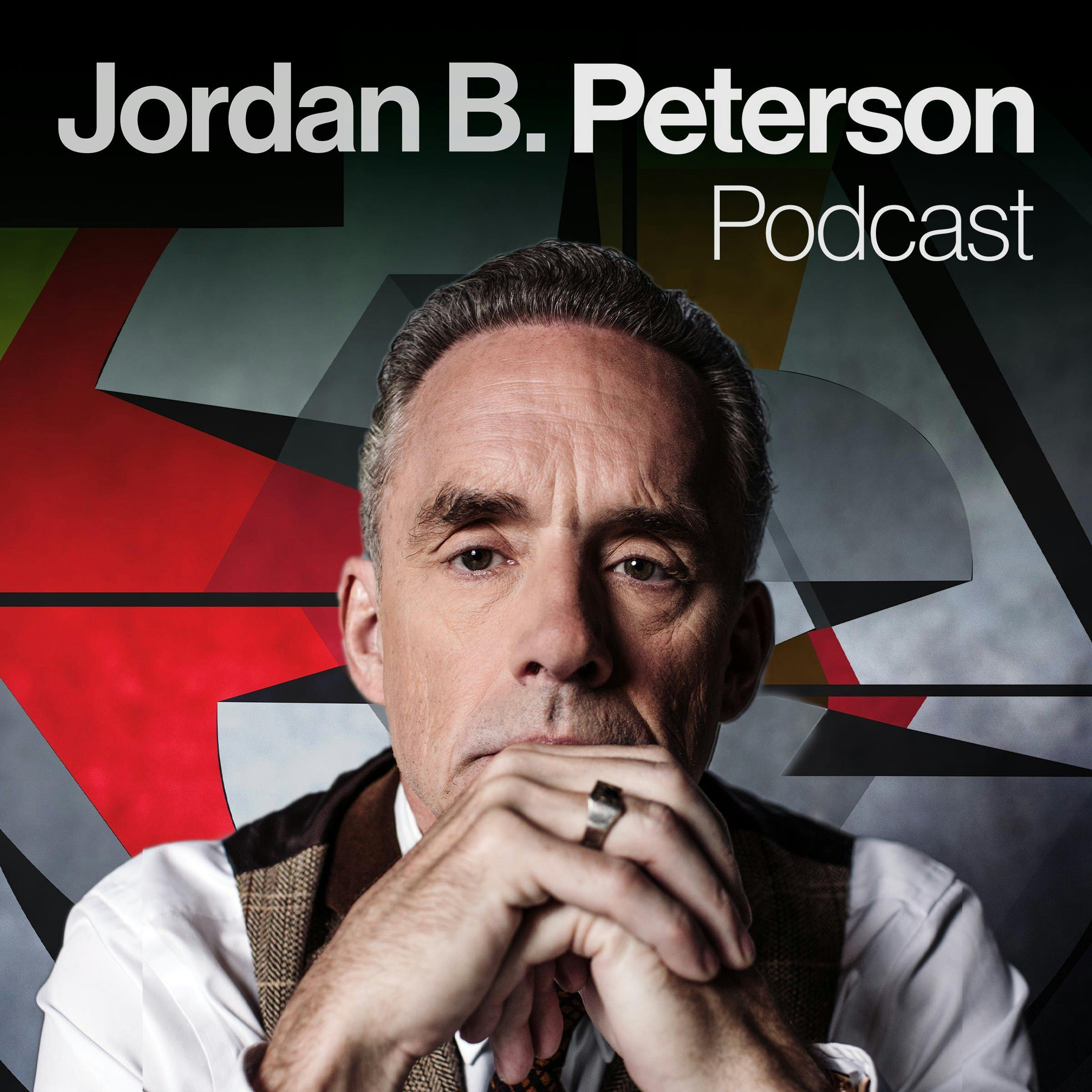
The Jordan B. Peterson Podcast
Dr. Jordan B. Peterson